

Implementing new-generation free trade agreements in the period of extensive and comprehensive international economic integration
Up to now, Vietnam has negotiated, signed and implemented 16 free trade agreements (FTAs) with nearly 60 partners; in which 12 FTAs have been implemented, 1 FTA has been concluded and will be ratified and3 ones arecurrently innegotiation process. Joining these FTAs will provide great opportunities for Vietnam in the period of extensive international economic integration but also risks and challenges that the country must overcome to enhance the competitiveness of its economy, promote foreign economic activities andparticipate in higher value-added production stages.
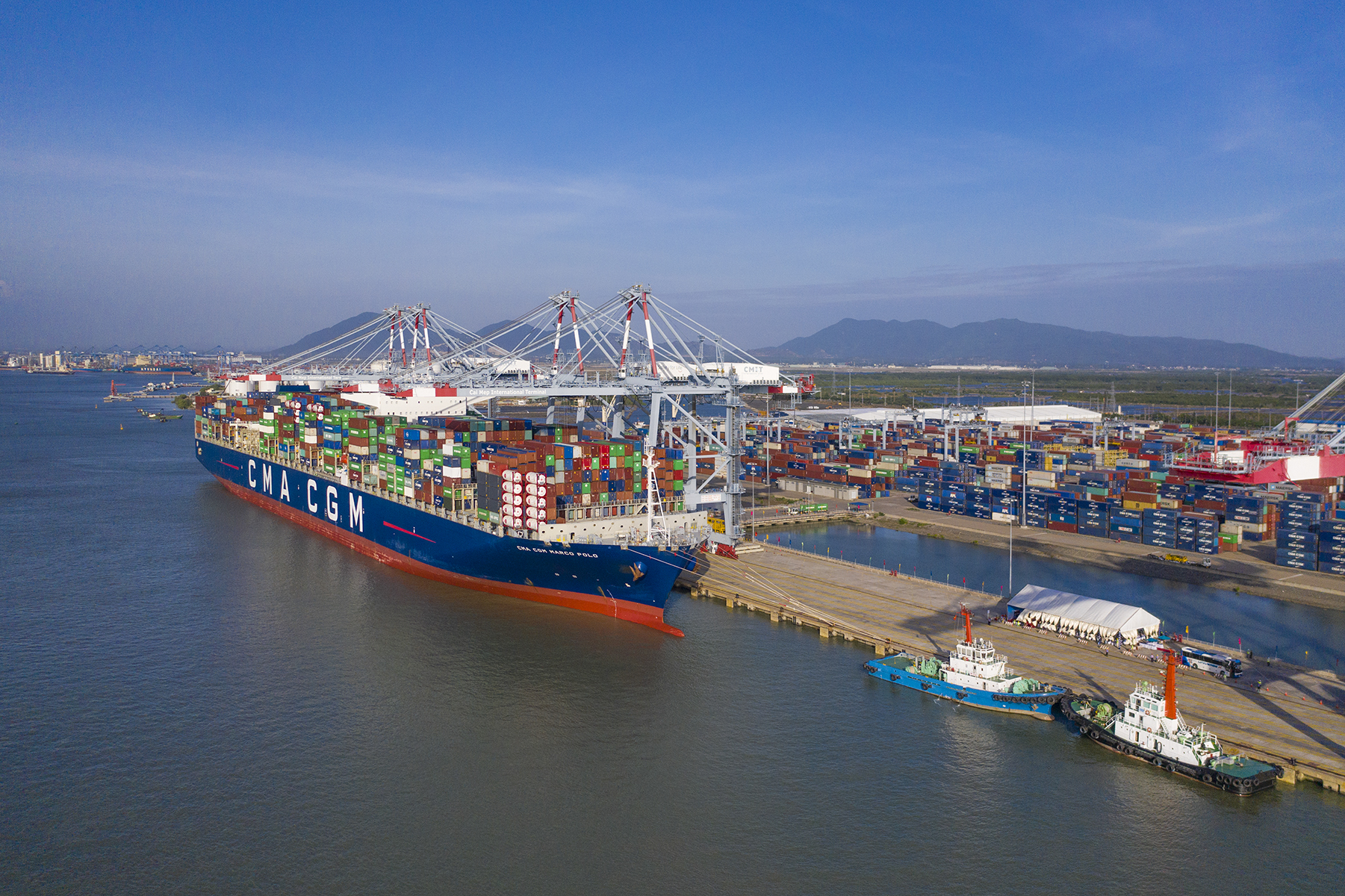
The implementation of new generation FTAs is an opportunity for Vietnam to perfect its socialist-oriented market economy institution _Photo: cmit.com.vn
Therefore, in this context of opportunities and challenges interweavement, Vietnam is making enormous efforts in term of foreign policies to help the country intergrate deeply into international economy, consolide and strengthen the cooperation between Vietnam and partner countries as well as bring practical benefits, especially in economic, trade, investment and sustainable development fields in accordance with the policy and orientation of State and Communist Party of Vietnam.
Important turning-points
In 2019, global economic and trade growth shows signs of decline due to the increasing trend of protectionism and trade tensions among major economies. According to forecasts of prestigious international economic organizations such as the International Monetary Fund (IMF) and the Organization for Economic Co-operation and Development (OECD), in 2019, global GDP will grow at only 2,9% - 3%, a decline in comparison with3,6% in 2018. The global trade is predicted to increase only 1,2%. The multilateral trading system continues to face big challenges, in which the process of reforming the World Trade Organization (WTO) has not made substantive progress due to profound disagreements among groups of countries. The key functions of WTO such as trade negotiations and dispute resolution were not as effective as expected. However, the bright spot in 2019 global trade lanscape is that many economies, especially the ones in Asia-Pacific region continue to actively promote multiple forms of economic cooperation in diverse fields.
Against the background of turbulent global economy and trade, Vietnam’s achievements in international economic integration in 2019 are really impressive. In fact, during the first 11 months, Vietnam's exports reached more than US $ 240 billion, up by 7,9% from 2018 to 2019 for the same period, reaching the target of 7% - 8% set by National Assembly. This was also the fourth consecutive year of maintainning export growth. Up to november 2019, total value of foreign direct investment (FDI) newly commited, adjusted and shares of foreign investors amounted to 31 billion USD, up 3,1% compared to that of the same period in 2018; FDI disbursement reached more than 17 billion USD, up 7,2%; The number of newprojects that were delivered investment registration cerfiticates increased by more than 28%. These are very positive results in the context of declining trade and investment activities of many developing economies due to the impact of regional and global economic environment.
During the year of 2019, Vietnam's international economic integration witnessed important turning-points, especially its active participation and implementation of "new generation" FTAs, including Comprehensive and Progressive Agreement for Trans-Pacific Partnership – CPTPP that was officially came into force on 14 january 2019 and European-Vietnam Free Trade Agreement (EVFTA) that was concluded on 30 June 2019. Vietnam will benefit more from these FTAs compared to other FTAs thanks to thebetter market access for goods, service and investmentand their shorter schedule in comparision with most other FTAs that Vietnam has previouslysigned and joined.
Under the framework of CPTPP, signatory countries commited to eliminatefrom 97% to 100% of import tariffs over a 10-year period. Notably, most of Vietnam's major export agricultural products will enjoy a zero percent import tarifffrom the date of the entry into force of this Agreement or 3 -5 years later for some types of aquatic products (fish, shrimp), fresh and processed vegetables and fruits, rice, dried nuts, ...
Meanwhile, for EVFTA, right after the agreement comes into force, EU will eliminate import duties on about 85,6% of tariff lines, equivalent to 70,3% of Vietnam's exports turnover to EU market. After 7 years since EVFTA’s entry into effect, EU will eliminate import duties on 99,2% of tariff lines, equivalent to 99.7% of Vietnam's exports turnover. On the Vietnamese side, it will implement the roadmap to open markets for goods, services and investment to partner countries. Under the framework of EVFTA, right after the agreement’s entry into force, Vietnam will eliminate import duties on 48,5% of tariff lines, equivalent to 64,5% of EU exports to Vietnam and this rate will increase to 91,8% after 7 years. For signatory countries ofCPTPP, Vietnamese Government issued on 26 June 2019 a Decree No. 57/2019/ND-CP on the preferential export tariff and special preferential import tariff to implement CPTPP’s commitments for the period of 2019 – 2022. It defined specifically the level of tariff reduction applied to each partner country. In services and investment fileds, Vietnam has also made commitments on market access at the same level or even higher than the commitments of WTO. For example, within the framework of EVFTA, the service sectors that Vietnam committed to facilitate EU investors included specialized services, financial, telecommunication, transportation andlogistics services, etc.
With the characteristics of “new generation” FTAs, CPTPP and EVFTA agreements also make commitments in sectors such as labor, state-owned enterprises, intellectual property, public procurement and sustainable development. These commitments have not yet been introduced in most previous FTAs. EVFTA has a separate chapter on sustainable development issues, which stipulates that contracting parties must conform to international standards such as the ones of International Labor Organization (ILO), the commitments of multilateral environmental agreements, the Montreal Protocol on Substances that Deplete the Ozone Layer , the International Convention for the Prevention of Pollution from Ships, the Convention on International Trade in Endangered Species of Wild Fauna and Flora, etc.
Great opportunities from new generation FTAs
It is obvious that with extensive and comprehensive commitments, CPTPP and EVFTA agreements will provide a wide range of benefits to Vietnam. Firstly, these agreements contribute to creat a stable and long-term framework for theconsolidation and enhancement of cooperation relations, especially economic cooperation between Vietnam and other contracting countries, including several important partners such as Japan, Australia, Canada, Singapore, Malaysia... and EU member countries.
The implementation of CPTPP and EVFTA is an important step promoting the diversification of markets and partners for the country. According to the General Statistics Office, during the first 11 months of 2019, Vietnam's exportturnover toward CPTPP markets grew well. This means that the country has effectively taken advantage of the commitments from this agreement to promote exports and diversify export markets. Remarkably, export turnover to major and potential markets increased positively, in which, Mexico increased by 30%, Canada 27% and Japan 7%. After its entry into force, EVFTA is predicted to rise Vietnam's exports to EU by 42,7% in 2025 and 44,37% in 2030, contributing to its economic growth and job creation. According to research results, the items that will be benefited the most from thesenew generation FTAs are respectively agricultural products, fisheries, footwear, textiles, wood exports, some machinery products and components.
In term of FDI attraction, Vietnam will have the opportunity to receive "high quality" FDI inflows from CPTPP member countries such as Japan, Canada, Australia, … and EU members, especially in the areas where EU enterprises have advantages likehigh-tech manufacturing industry , clean energy, renewable energy, high quality services, finance -banking services and so on. According to a survey conducted by European Chamber of Commerce in Vietnam (Eurocham), 80% of EU businesses think that EVFTA would help Vietnam increase its competitiveness; 72% of them said that EVFTA would help Vietnam become a gateway for EU businesses in Southeast Asia.
The implementation of new generation FTAs is a great chance for Vietnam to improve the socialist-oriented market economy institution, perfect the legal system, improve the investment and business environment so that it will become more simplified, transparent and approachable to international standards. Inthe field of labor, the fact that Vietnam National Assembly approved Labor Code modifying and completingmany important regulations relative to labor relations and protection of workers' rights is higly appreciated by the international community as Vietnam has seriously and effectively implemented its commitments in EVFTA and CPTPP agreements, contributing to improveVietnam’s employment and labor relations, building a solid foundation for its international integration and fair trade. In addition, the implementation of commitments on sustainable development in the new generation FTAs will concretize Vietnam's goals of sustainable development.
In the context of increasing trend of protectionism and trade tensions, Vietnam's signing and implementation of new generation FTAs have affirmed its consistent policy that supports economic innovation, international integration and trade liberalization in an open, transparent and rule-based manner. Besides, it maintains the momentum to connect economies in the Asia-Pacific region.
However, besides aboved-mentioned great opportunities, Vietnam also faces many difficulties and challenges from the implementation of new generation FTAs. As a member country with a lower level of development than most of CPTPP and EVFTA’sother members, Vietnam will be under pressure to open markets for goods, services and investment. In order to take advantage of export opportunities, Vietnamese goods will have to satisfy technical standards and food safety and hygiene requirements as well as the "strict" standards relative to the rules of origin, especially for textiles and seafood. Preliminary assessments show that the utilization rate of preferential commitments of Vietnamese goods in the "new generation" FTAs is still modest. The preferences utilization rate of many export items is even at 1 % - 2%. Currently, a large number of enterprises still do not really pay attention to CPTPP and EVFTA and lack information about them.
The implementation of "new generation" agreements commitments requires Vietnam an appropriate roadmap and comprehensive solutions to complete its institutional - legal system. Parallelly,it should reinforce communication and propaganda activities, universalize knowledge about FTAs, improve competency of officials of ministries, branches, localities and businesses in order to take advantage of opportunities and avoid commitments violations in CPTPP and EVFTA agreements. Vietnamese businesses also need to well understand the content of CPTPP and EVFTA’s commitments related to their business sectors so that they could establish their own strategies to access markets, expand exports and attract investment from CPTPP and EVFTA member countries.
New phase of international economic integration
Looking back on 2019, it can reaffirm that Vietnam's participation in new generation FTAs such as CPTPP and EVFTA marks a new phase of its international integration, which is the period of extensive and comprehensive international economic integration. Overall, despite the difficulties and challenges, the new generation FTAs such as CPTPP and EVFTA will bringtremedous advantages to Vietnam from the perspective of strengthening cooperation between Vietnam and partner countries as well as specific benefits for trade, investment, growth, employment and sustainable development.
Due to the wide and comprehensive scope of commitments, the process of negotiating and signing new generation FTAs requires active participation and overall coordination among ministries, departments and sectors. In particular, the process of signing EVFTA for the period 2018-2019 dealed withdiverse challenges because EU was focusing on many important internal issues such as the Brexit or preparatives for European Parliament elections in May 2019. Moreover, EU also stipulates strict regulations on the signing process. For instance, EVFTA’s documents contain more than 4,000 pages that must be translated into the language of all 28 member countries in order to revise legallanguage. Besides, the decision of signing an agreement requires the consensus of the majority of member states. In this context and being aware of the importance of EVFTA for Vietnam, Vietnam Prime Minister instructed relevant ministries and authorities to actively discuss with EU agencies to promote the early signing of agreements. The Ministry of Foreign Affairs is assigned to assume the role of leader and coordinate with the Ministry of Industry and Trade in conducting political-diplomatic lobby and working with EU delegations to promote the signing and ratification of EVFTA and the EU-Vietnam Investment Protection Agreement (EVIPA)in the shortest time. It can be said that the early EU members' approval of EVFTA and EVIPA’s conclusion affirmed that this organization appreciates the role and position of Vietnam and givesa particular priority to the bilateral and comprehensive cooperation. This succes results from a close and effective coordination between two sides.
In the coming time, the Ministry of Foreign Affairs and Vietnamese representative agencies in foreign countries will continue to coordinate closely with the Ministry of Industry and Trade and other ministries, departments, localities and enterprises to take full advantage of CPTPP's commitments for the country's socio-economic development and international economic integration. At the same time, this Ministry will continue to coordinate with Vietnamese and EU agencies to accelerate the ratification of EVFTA Agreement in order to put this important agreement into force and implementation, contributing topromote and strengthen the comprehensive partnership between Vietnam and EU.


